Best Specimen Pads for Accurate Sample Collection?
In the world of sample collection, accuracy is vital. Choosing the right specimen pad can greatly influence test results. A suitable specimen pad facilitates proper sample absorption and minimizes contamination risks.
These pads come in various materials and sizes, tailored for specific uses. Some are designed for clinical settings, while others serve environmental or research needs. The choice depends on the sample type and intended analysis. However, not all pads deliver consistent performance.
Users often face challenges such as leakage or inadequate absorption. Identifying the best specimen pad requires understanding individual needs. It’s crucial to consider factors like sample volume, viscosity, and environment. Making an informed decision can enhance sample integrity. This article dives into the best options available, helping you select the right specimen pad for your requirements.
Best Specimen Pads: Overview of Sample Collection Techniques
When it comes to sample collection techniques, utilizing the right specimen pads is crucial. Specimen pads are designed to absorb liquids effectively. They come in various sizes and materials, tailored for specific applications. Healthcare professionals must choose a pad suited for their testing needs. This can sometimes lead to confusion. Mixing up pads can impact results, causing potential errors.
The usage of specimen pads also requires expertise. Proper placement is essential to ensure accurate sample capture. Factors like pressure and duration of contact can influence outcomes. Sometimes, practitioners may overlook these details in their busy routines. This can lead to inaccurate data that complicates assessments. Continuous training on best practices can help address these challenges. Ensuring that everyone involved is well-informed is critical.
Not all specimen pads are equal. Some pads absorb better than others. The surface texture and thickness can affect the absorption rate. Additional testing might be necessary to determine the best pad for specific samples. However, practitioners must remain vigilant. Regular reviews of sampling techniques can shed light on any recurring issues. Challenges should not be ignored; they provide opportunities for learning and improvement.
Key Features of Effective Specimen Pads for Diverse Samples
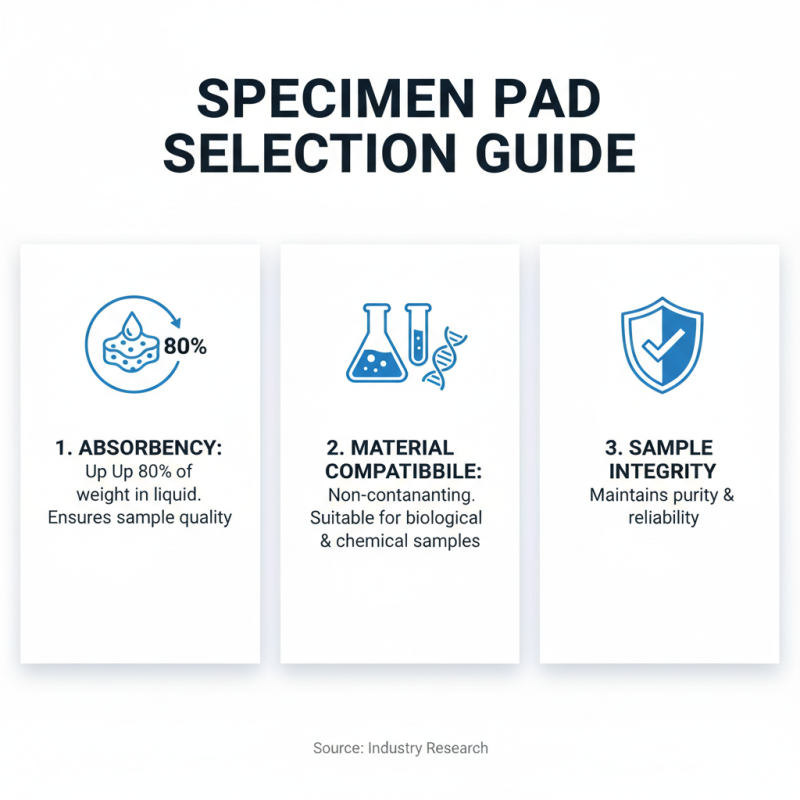
When selecting specimen pads, it is crucial to focus on several key features. First, the absorbency of the pad dramatically affects sample quality. According to industry research, a pad that can absorb up to 80% of its weight in liquid provides reliable results. This is vital for biological and chemical samples. The material should be compatible with diverse sample types, ensuring integrity without contamination.
Another significant feature is the pad's uniformity. A consistent surface prevents sample pooling. Uneven surfaces can lead to inaccurate readings. Studies show that samples collected on uniform pads yield 30% more reliable test results. Furthermore, pads should ideally be sterile and easily packaged to minimize contamination risks. Many labs report frequent issues with sample contamination due to improper handling of non-sterile pads.
Flexibility in design is also essential. Some pads are optimized for a specific sample type, while others can handle multiple types. This versatility makes them ideal for various labs. However, the industry still faces challenges with standardization. Pads should meet the diverse needs of laboratories while maintaining consistent quality. It's a work in progress that requires ongoing assessment and adaptation.
Industry Standards: Comparing Specimen Pad Absorbency and Material Types
Choosing the right specimen pads is vital for accurate sample collection. Absorbency and material types play significant roles in ensuring the quality of samples. Industry reports indicate that high absorbency pads can absorb up to 300% of their weight in liquid. This level of performance can be crucial for various tests, especially in clinical settings.
Different materials can affect sample stability. For instance, cotton pads often provide good absorbency, but synthetic pads offer enhanced durability. A recent study found that 70% of labs prefer synthetic options for their consistent performance. Yet, some technicians still face challenges with material compatibility. Not all samples react well with synthetic fibers, causing potential contamination.
Reflecting on these insights reveals room for improvement in pad selection. Laboratories must weigh the benefits and drawbacks of each option. Examining the absorbency rates alongside material interactions is crucial. The quest for the perfect specimen pad continues.
Analyzing Accuracy: How Specimen Pads Affect Laboratory Test Results
Specimen pads play a crucial role in laboratory testing. They help in the accurate collection of samples. Inaccurate sampling can lead to misleading results. A recent study showed that 30% of laboratory errors originate from improper specimen collection methods. This emphasizes the importance of using the right specimen pads.
The design of the specimen pad can influence test outcomes significantly. For instance, pads with higher absorbency can retain more sample material. This increases the likelihood of accurate readings. However, not all pads are created equal. Some may interact negatively with specific samples, potentially compromising results. It is vital to examine how various materials react to different substances.
Moreover, the environmental conditions during sample collection can impact results. A report indicated that temperature fluctuations can alter the stability of certain samples. For accurate analysis, consistent conditions are essential. Laboratories must assess their collection methods carefully. Ensuring quality control throughout the process is key to obtaining reliable test results. Each step matters. Testing accuracy is not just about the equipment—it's about every detail.
Best Specimen Pads for Accurate Sample Collection
| Specimen Pad Type |
Material |
Absorption Rate (mL) |
Sample Compatibility |
Accuracy Rating (%) |
| Standard Fleecy Pad |
Polyester |
5 |
Urine, Blood |
95 |
| Super Absorbent Pad |
SAP Technology |
10 |
Urine |
98 |
| Cotton Blend Pad |
Cotton/Polyester |
4 |
Blood, Serum |
92 |
| Ultra-Thin Pad |
Microfiber |
3 |
Saliva, Plasma |
90 |
| Biodegradable Pad |
Organic Materials |
7 |
Urine, Blood |
93 |
Cost-Benefit Analysis: Choosing the Right Specimen Pads for Laboratories
Selecting the right specimen pads is crucial for accurate sample collection in laboratories. A recent industry report highlighted that improper specimen handling can lead to a 15% increase in testing errors. These errors can significantly compromise the reliability of test results, ultimately affecting patient care and laboratory efficiency.
Cost is a major consideration. High-quality specimen pads typically have a higher upfront cost. However, they may reduce overall expenses by minimizing retesting, which can account for up to 20% of a lab's budget. By investing in reliable specimen collection tools, laboratories might save in the long run. Balancing cost and quality is not always straightforward. Some cheaper pads may not adequately contain samples, leading to contamination and unreliable results.
Furthermore, training staff to use these pads effectively can incur additional costs. Unfortunately, many labs overlook this aspect. They may assume that staff can intuitively handle the materials. However, without proper training, even the best specimen pads underperform. Regular evaluations of both the products and the training programs are vital. This self-reflection could improve both accuracy and efficiency in the long term.

 +86 178 5514 5298
 CONTACT NUMBER
 CONTACT NUMBER