How to Choose the Right 95 kPa Bag?
Choosing the right 95 kPa Bag starts with the shipment, not the product label. What will the bag hold? How will it be sealed, packed, and handled? A bag that looks sturdy on a workbench may still be unsuitable for a specific transport requirement. Small details matter. A weak seal, unclear labeling, or poor fit inside secondary packaging can create avoidable problems.
The World Health Organization’s Guidance on Regulations for the Transport of Infectious Substances 2023–2024 describes packaging requirements that include a 95 kPa pressure-differential test for applicable packaging instructions. That figure is a performance criterion, not a guarantee that every bag suits every shipment. Check the product’s test documentation, material compatibility, closure design, and stated use. Then confirm that the complete packaging system—not just the inner bag—meets the relevant requirements. Do not rely on a marketing claim alone.
A careful choice is usually a documented one. Yet specifications can be easy to misread, especially when product pages omit test conditions. That deserves a second look. No verifiable, named specialist quotation was provided for this topic, so attributing a direct quote here would be misleading. This guide instead uses published technical guidance as its reference point. The goal is practical: help buyers compare bags using evidence, ask better supplier questions, and avoid treating “95 kPa” as a one-size-fits-all promise.
Identify the Intended Use and Applicable Transport Requirements
Start with the contents and route, not the bag’s “95 kPa” label. Is the shipment a diagnostic specimen, a temperature-sensitive sample, or a non-hazardous liquid? Confirm its classification and match the packaging to the transport mode, handling conditions, and destination requirements. IATA Dangerous Goods Regulations, Packing Instruction 650, specifies that the primary receptacle or secondary packaging must withstand a pressure differential of at least 95 kPa without leakage. The specified test temperature range is −40°C to +55°C. (IATA DGR, PI 650; WHO, Guidance on Regulations for the Transport of Infectious Substances, 2023–2024.)
That figure applies to a tested packaging component, not automatically to any standalone bag. Check documentation for the exact bag construction, closure, volume, and assembly tested. Then verify secondary containment, absorbent capacity where required, outer packaging, and temperature control against the applicable instruction. WHO’s guidance describes triple packaging for relevant infectious-substance shipments: a leakproof primary receptacle, leakproof secondary packaging, and strong outer packaging. (WHO, 2023–2024.) A label alone is not enough. A bag may fit the sample but still fail at the seal or during rough handling. Record the route and contents before choosing; actual filling volume is easy to overlook.
Select the Right Size, Material, and Closure
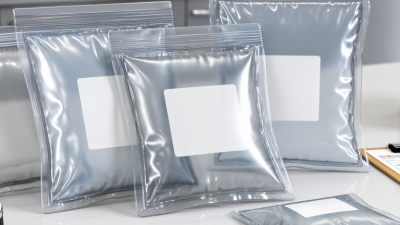
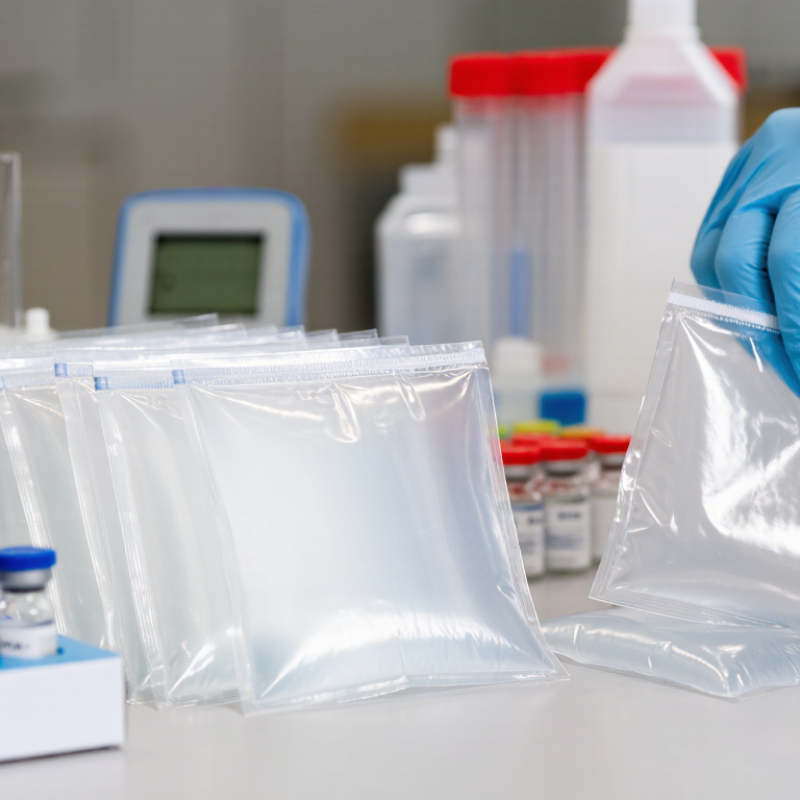
A 95 kPa bag should fit the packed contents, not just the inner container. Measure the container, cap, absorbent material, and any protective sleeve before choosing a size. Leave enough room to close the bag without stretching its seams or trapping material in the seal. Too much extra space can also let contents shift during handling. Fit matters.
Choose material for the actual conditions of use. Consider puncture resistance, flexibility, and compatibility with any liquids or cleaning agents involved. If the bag may be chilled, check that it remains flexible at the expected temperature. A thicker-looking film is not automatically more dependable; ask for documented pressure-differential performance and test conditions. I have seen this detail overlooked.
The closure deserves the same attention as the film. A zipper may be convenient for routine handling, while a heat seal can provide a different, one-time closure; suitability depends on the package design and validated instructions. Check that the closure runs smoothly across the full width, with no folds or residue in the sealing area. Small details count. Before use, confirm that the selected size, material, and closure have been evaluated together for the intended contents and handling conditions.
Check Compatibility with the Contents and Packaging
Compatibility begins with the contents themselves and every layer around them. A liquid may soften a film; oily residue can challenge a seal; sharp corners may press against the bag wall. Check the bag material against the actual contents, including concentration, temperature, and expected contact time. Do not assume that a familiar appearance means suitable protection. Small details matter.
Then assess the complete package, not just the bag. Match its dimensions to the closed primary container, leaving enough room to seal it without stretching or trapping the closure. Check that caps, edges, and labels cannot puncture or foul the seal. If the contents could leak, use compatible absorbent material and a suitable secondary container. Confirm that the assembled packaging—not merely an empty bag—is intended for the required 95 kPa pressure differential, and follow its test instructions. A bag can look right and still fail when overfilled or folded at the seal. That is easy to overlook. Review the supplier’s material and performance data, then test the chosen configuration under realistic conditions before routine use.
Verify Testing, Certification, and Supplier Documentation
A 95 kPa claim needs evidence, not just a printed label.
The UN Model Regulations, 23rd revised edition (2023), identify a 95 kPa pressure differential for applicable packaging tests. That equals 0.95 bar.
Ask for the complete test report, including test method, sample count, conditioning, pressure duration, and leak inspection results. Check that the tested bag matches the product offered: same film structure, dimensions, seams, and closure. A report for a similar design is not proof.
Paperwork matters.
Request the laboratory’s ISO/IEC 17025 accreditation details and confirm its scope covers the test performed. The supplier file should also include a current certificate, production-lot traceability, material specifications, and written change-control procedures. Dates matter: an old report may not cover a revised film or seal. Small gaps matter. A common review weakness is accepting a certificate without checking its sample description against the purchase specification. Compare them line by line. If the report omits key test conditions, ask for clarification before approval; a polished certificate can still leave questions unanswered. Keep the final report and supplier responses with receiving records, so future batches can be checked against the same evidence.

 +86 178 5514 5298
 CONTACT NUMBER
 CONTACT NUMBER