How to Choose the Right 95 kPa Specimen Bag for Your Needs?
When selecting a 95 kPa Specimen Bag, it’s crucial to understand your specific requirements. Dr. Alice Morgan, a leading expert in laboratory materials, emphasizes, "The right specimen bag can make all the difference in sample integrity." Choosing the wrong bag could compromise your irreplaceable samples.
Factors to consider include material, size, and sealing method. For example, bags made from polyethylene offer durability and chemical resistance, while a properly sized bag helps avoid leaks. Medical professionals and laboratories rely on these bags for accurate diagnostics and research. A small oversight in selection can result in significant consequences.
Moreover, understanding industry standards is key. Different applications may require different levels of durability and airtightness. Evaluating your needs may highlight complexities you didn't initially consider. It’s essential to reflect on your specific applications before making a decision about a 95 kPa Specimen Bag. Quality bags can affect not just the sample, but the accuracy of results.

Understanding the Purpose of 95 kPa Specimen Bags
When working in laboratory settings, understanding the purpose of 95 kPa specimen bags is crucial. These bags are designed to contain samples under specific pressure conditions. They help maintain the integrity of specimens during transport and storage. This is vital for accurate testing and diagnostics. A study by the Clinical Laboratory Standards Institute highlights that improper containment can lead to degradation in sample quality by up to 25%.
The 95 kPa pressure rating indicates the bags can withstand certain external pressures without compromising the contents. This quality is particularly important in environments where samples are exposed to fluctuations in temperature or pressure. For instance, blood samples or biological materials may require such bags to ensure they remain stable for analysis. Choosing the right bag can significantly impact the reliability of test results, which is paramount in clinical decision-making.
Yet, not all specimen bags meet the stringent requirements for all types of samples. Some may be more resistant to chemical exposure, while others might offer better sealing properties. It's essential to reflect on the specific needs of your samples. Make sure to evaluate factors such as sample type, storage conditions, and transportation methods. Testing different bags can sometimes lead to unexpected results. Being thoughtful about these choices can enhance lab outcomes significantly.
How to Choose the Right 95 kPa Specimen Bag for Your Needs? - Understanding the Purpose of 95 kPa Specimen Bags
| Feature |
Description |
Benefits |
| Material |
High-strength polyethene |
Durable and puncture resistant |
| Size |
Variety of sizes (small, medium, large) |
Flexibility to store different specimen types |
| Seal Type |
Ziplock or self-sealing |
Easy closure and secure containment |
| Usage |
Biological samples, medical specimens |
Proper containment for transport and storage |
| Pressure Compatibility |
Designed for 95 kPa pressure |
Ensures safety and integrity of samples under pressure |
Identifying Different Types of 95 kPa Specimen Bags Available
When selecting a 95 kPa specimen bag, it's crucial to understand the various types available. Generally, these bags fall into three main categories: temperature-controlled, puncture-resistant, and multi-compartment. Each type serves a specific purpose, addressing different storage or transportation needs.
Temperature-controlled bags are designed to maintain a specific environment. They often include insulation materials for biomedical samples. According to industry reports, using a temperature-controlled bag can reduce sample degradation by up to 40%.
Puncture-resistant bags are built with thicker materials to protect fragile specimens. They minimize the risk of leaks or breakage during transport. Multi-compartment bags allow for separate storage of different samples in one unit. This organization can prevent cross-contamination, enhancing laboratory workflow efficiency.
However, choosing the right bag can be challenging. Factors like size requirements and intended use must be carefully considered. Each type has its strengths and limitations. Users must reflect on their specific needs and the environment in which the bags will be used. Research indicates that improper selection can lead to costly sample loss or compromised results, highlighting the importance of informed decision-making.
Evaluating Material Options for Durability and Safety
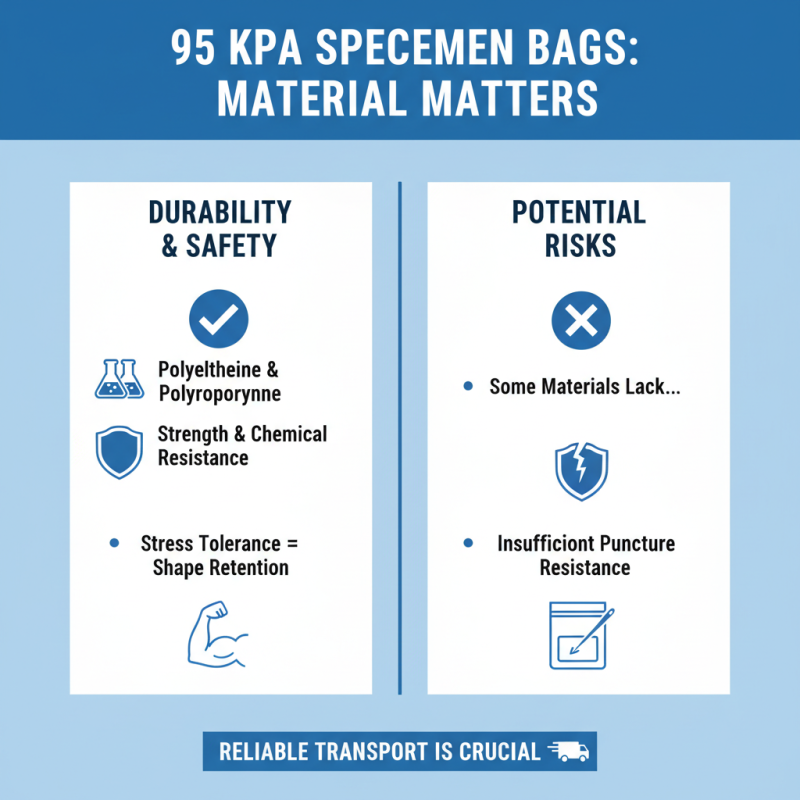
When selecting a 95 kPa specimen bag, material options play a critical role in durability and safety. Many bags use polyethylene or polypropylene due to their strength and resistance to various chemicals. These materials stand up well to stress, ensuring they hold their shape under pressure. However, not all options are equal. Some may lack adequate puncture resistance, undermining their reliability during transport.
Consider the environment where the bag will be used. If exposure to extreme temperatures or moisture is expected, choosing a specialized bag is essential. Some bags are designed to withstand higher humidity or extreme cold. This enhances their performance but may come at an increased cost. Assessing whether the added durability is worth the investment is a thoughtful process.
Another aspect to reflect on is safety. Proper sealing mechanisms are crucial for contamination prevention. Look for bags with secure zippers or seals that won't easily open during transit. A bag that fails to protect its contents can render it useless. Prioritizing both material quality and seal design is key to ensuring your specimens remain safe and intact.
Assessing Size and Volume Requirements for Your Specific Needs
Choosing the right 95 kPa specimen bag involves careful consideration of size and volume requirements. Different applications demand unique dimensions. For example, clinical laboratories often require specific sizes to fit certain sample types, like blood or urine specimens. In contrast, research facilities may need larger bags to accommodate more extensive samples. Understanding the exact volume needed is crucial.
Consider the amount of material you'll store. A bag that is too large can lead to sample degradation, while one that's too small can cause spillage. Accurate measurements will help you avoid these pitfalls. Reflect on past experiences when you’ve faced challenges with sample containment. Learning from those instances can guide your decision-making process.
It's also essential to assess the closing mechanisms of the bags. Some offer zip closure, while others use adhesive seals. This choice will impact how securely your samples are held. Think about how easily the bags can be opened and resealed. Convenience often plays a significant role in efficiency. If you've struggled with difficult-to-use bags, take this into account for future purchases.
Considering Regulatory Compliance and Best Practices in Usage
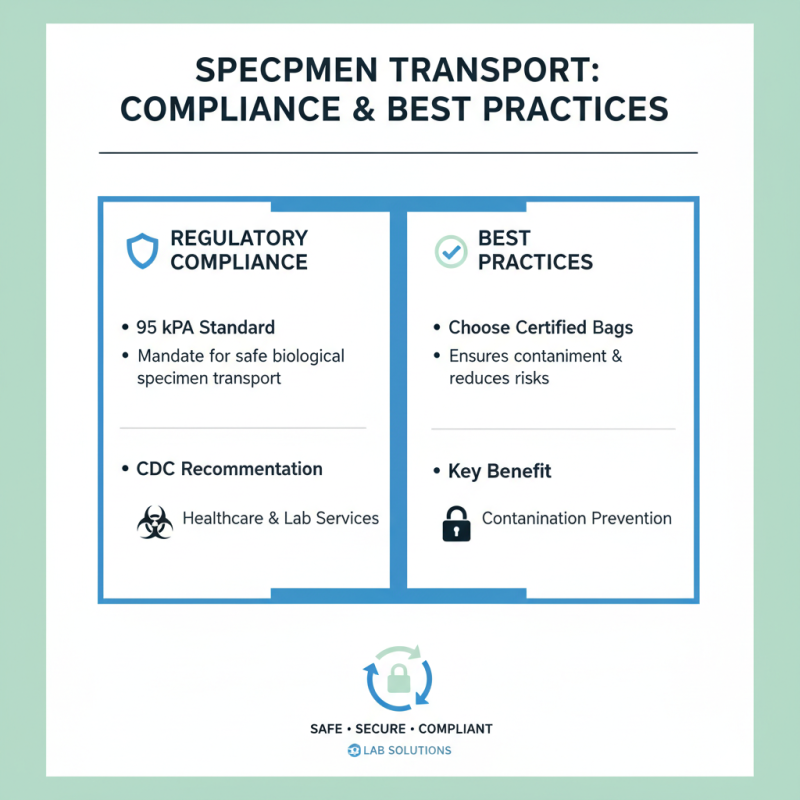
Choosing the right 95 kPa specimen bag involves understanding regulatory compliance and best practices. Many industries, including healthcare and lab services, must adhere to strict guidelines. For example, the CDC recommends using 95 kPa bags for the safe transport of biological specimens. This standard ensures containment during transit, reducing contamination risks.
It’s essential to evaluate your specific needs. The design should provide clarity and durability. Weak bags might compromise specimen integrity. A report by the American Society for Testing and Materials noted that up to 30% of specimen failures result from inadequate packaging. This statistic highlights the importance of selecting high-quality, compliant bags.
Tips: Always verify the bag's certification status. Ensure it meets the relevant standards. Check for visible defects before use. Implement regular quality checks to maintain safety protocols in your lab or facility. Also, train staff on proper handling techniques to minimize human error. Even minor lapses can lead to significant data loss or compromised samples.

 +86 178 5514 5298
 CONTACT NUMBER
 CONTACT NUMBER