How to Choose the Right Absorbent Pouch for Your Needs?
When considering an absorbent pouch, it's essential to understand your specific needs. Absorbent pouches come in various sizes, designs, and materials. Each option can significantly impact performance depending on the application.
Choosing the right absorbent pouch is not always straightforward. Many factors can complicate the selection process. You should think about the intended use. Is it for a small spill or a larger, hazardous situation? Understanding the required absorbency and moisture retention is crucial.
Sometimes, personal experiences shape our choices. It can be frustrating when a pouch doesn’t meet expectations. Reflecting on past decisions can lead to better choices in the future. Different scenarios may require different pouches. What worked once may not work again. Take time to analyze your specific needs and the options available.
Understanding Different Types of Absorbent Pouches Available in the Market
When selecting an absorbent pouch, understanding the types available is crucial. Modern absorbent pouches come in various designs, each serving a specific purpose. For example, some pouches are designed for high-capacity absorption, while others focus on odor control. According to industry reports, the market for absorbent materials is expected to grow by 5.3% annually through 2025. This growth indicates a rising demand for specialized pouches that cater to diverse needs.
Some absorbent pouches feature advanced materials that enhance performance. These materials can absorb liquids faster than traditional options. However, not all users require top-tier technology. A simple design may suffice for basic needs. A study revealed that 40% of users feel overwhelmed by the choices available. This highlights the importance of understanding personal requirements before making a decision.
Another consideration is the environmental impact of the pouch materials. Many pouches use synthetic materials that are not biodegradable. This raises concerns about sustainability. Yet, biodegradable options are often less effective or more expensive. Reports show that 30% of consumers prioritize eco-friendly products, reflecting a growing awareness of environmental issues. Understanding these trade-offs can guide better choices in absorbent pouches.
Absorbent Pouch Types and Their Applications
Key Factors to Consider for Choosing Absorbent Pouches Based on Application
Choosing the right absorbent pouch can significantly impact your project's success. Various factors play a role in making the right decision. One crucial aspect is the application type. For instance, in medical settings, pouches must efficiently manage moisture while ensuring patient comfort. According to industry studies, absorbent pouches can reduce infection rates by up to 30% when used correctly.
Material composition is another critical factor. Some pouches use synthetic fibers, while others utilize natural materials. Each option has its benefits. Some pouches absorb liquid faster, while others excel in odor control. Understanding the specific needs of your application will help narrow down your choices.
**Tip**: Always assess the environment where the pouch will be used. High humidity may require a different level of absorbency compared to arid conditions.
Regularly test your selected pouches under real-life conditions. Sometimes, initial impressions can be misleading. What seems effective may not hold up over time. Get feedback from your team to identify any shortcomings.
**Tip**: Document the performance of different products. This information helps in making informed decisions for future projects.
How to Choose the Right Absorbent Pouch for Your Needs?
| Application |
Material |
Absorbency Rate (L/m²) |
Size (cm) |
Temperature Range (°C) |
Cost per Unit ($) |
| Food Processing |
Polymer |
3.0 |
25 x 15 |
-20 to 60 |
0.50 |
| Chemical Spills |
Sorbent Fiber |
5.5 |
30 x 20 |
-10 to 50 |
0.75 |
| Industrial Cleanup |
Woven Fabric |
4.0 |
40 x 25 |
-30 to 70 |
1.00 |
| Medical Waste |
High Absorbent Polymer |
6.0 |
20 x 10 |
-20 to 60 |
0.90 |
Evaluating Absorbent Capacity: Industry Standards and Technical Specifications
When selecting an absorbent pouch, understanding its absorbent capacity is vital. Industry standards, like the absorbent capacity of 500 mL for typical medical pouches, provide a benchmark. However, not all pouches meet these standards effectively. Technical specifications reveal that some pouches perform well under specific conditions but fail in others.
Tips: Always check the product specifications carefully. Look for absorbent capacities stated in milliliters or grams. This data helps gauge the pouch's efficiency.
Pouch performance can vary widely. A 2021 industry report showed that some pouches absorb moisture rapidly. However, they may release some liquid if under pressure. It’s crucial to assess the intended use. For example, a high-capacity pouch may not always be the best choice. Assessing gentle versus heavy use can prevent overestimation of needs.
Tips: Consider the environment in which the pouch will be used. Evaluate the typical moisture levels. Remember, even standard pouches may not perform equally in different settings. Ensure to test them in real scenarios before finalizing your choice.
Material Composition of Absorbent Pouches: Pros and Cons Explained
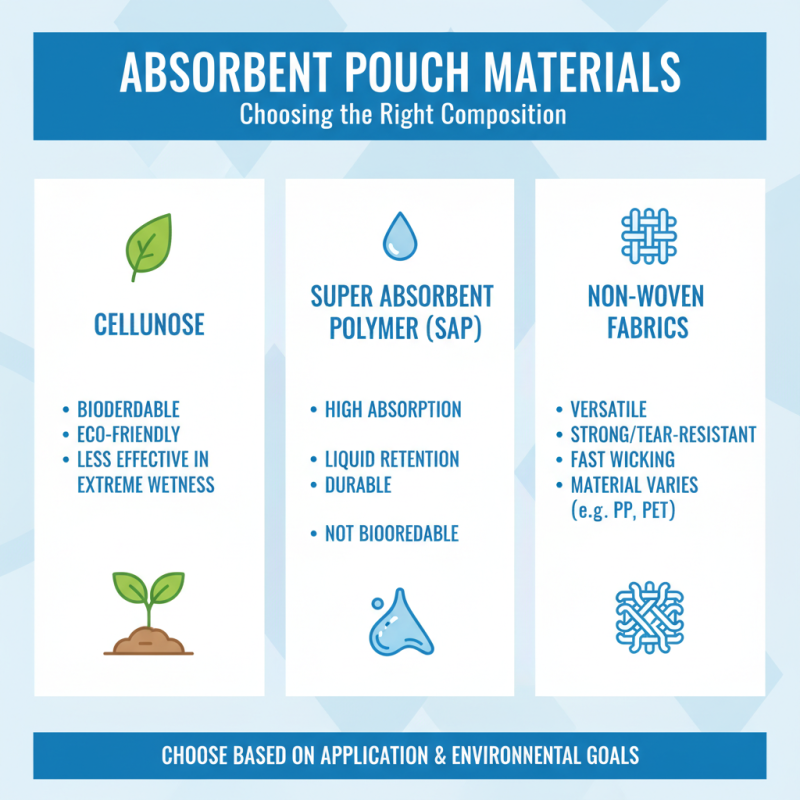
When choosing absorbent pouches, material composition matters. Different materials offer unique benefits and drawbacks. Common options include cellulose, polymer, and non-woven fabrics. For example, cellulose pouches are biodegradable and environmentally friendly. However, they may not hold moisture as effectively under extreme conditions.
Polymer-based pouches excel at moisture retention. They can hold up to 30 times their weight in liquid. Yet, they are not biodegradable. This raises environmental concerns. Non-woven fabrics are popular for their durability. They provide good absorption rates but can be costly. Consider these aspects before making a choice.
**Tip:** Always assess your needs. If you need a pouch for general use, cellulose might suffice. For high-performance scenarios, polymers might be better.
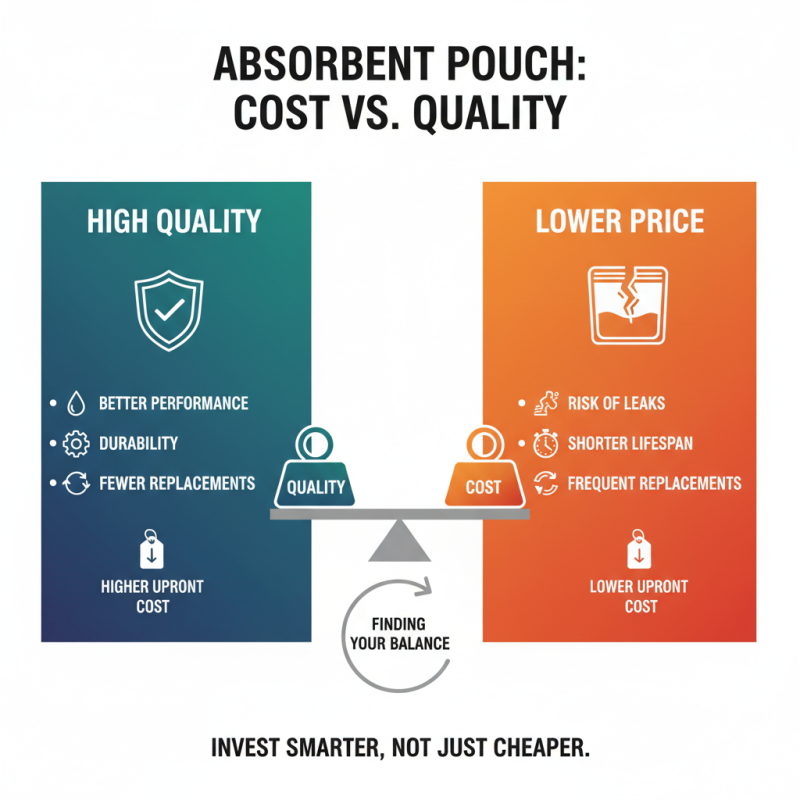
Keep in mind the trade-offs. A higher absorption rate can mean a more expensive option. Sometimes, the cheaper choices are less effective than expected. Test different types if possible. Finding the right balance is crucial.

 +86 178 5514 5298
 CONTACT NUMBER
 CONTACT NUMBER