Leave Your Message

How to Find Top Absorbent Sleeve Manufacturers in China

Finding a reliable Absorbent Sleeve manufacturer in China requires more than comparing prices. The right supplier should understand leakage control, material performance, production consistency, and international shipping risks. A sleeve may look simple, yet its absorbent core, outer barrier, seal strength, and fit can determine whether a damaged bottle becomes a contained incident or an expensive claim.

Industry research supports this careful approach. Smithers’ report, The Future of Sustainable Packaging to 2028, emphasizes rising demand for lighter, recyclable, and performance-driven packaging materials. Grand View Research also identifies stronger growth in protective and specialty packaging, driven by e-commerce, healthcare distribution, and stricter product-safety expectations. These trends make supplier verification increasingly important. Not every factory using the word “absorbent” offers the same capacity, testing standards, or traceability.

Look for manufacturers that can provide technical drawings, absorbency test results, material declarations, and batch records. Ask whether their facility operates under ISO 9001 controls. For medical, chemical, or sensitive liquid applications, request relevant compliance documents and independent laboratory reports. ISTA distribution-testing guidance can also help assess vibration, compression, and drop risks during transport.

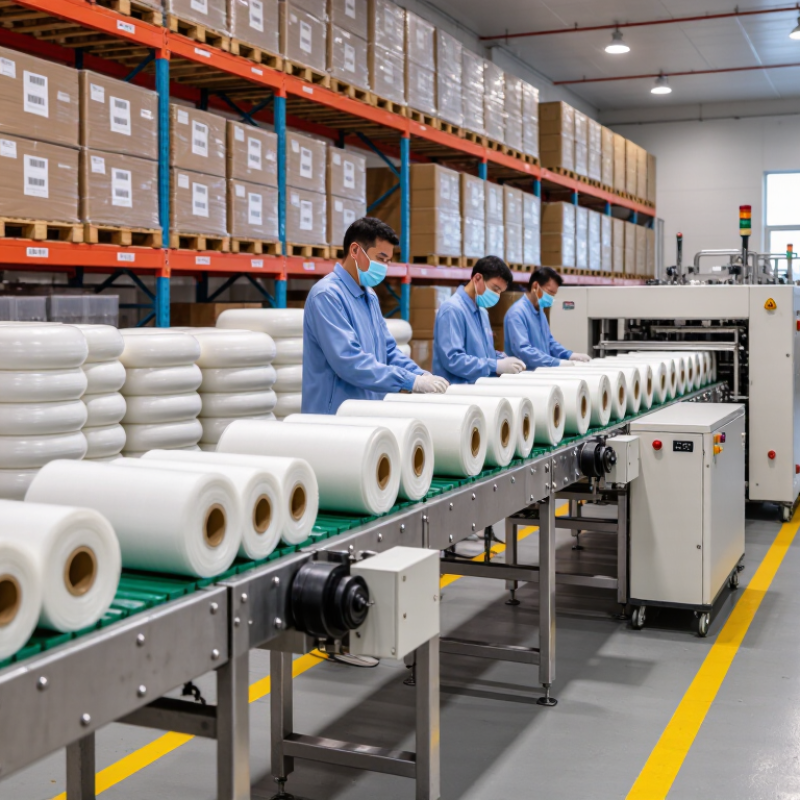
Visit the production line when possible. Inspect nonwoven rolls, absorbent granules, heat-sealed edges, and finished cartons. Small details matter. A weak seam can ruin a shipment.

Supplier selection is rarely perfect. Samples may perform well while mass production varies. Therefore, use a written specification, pilot order, pre-shipment inspection, and corrective-action process. Pricing deserves attention, but it should not replace evidence. The strongest Chinese manufacturer is the one that proves repeatable performance, communicates clearly, and improves when a weakness is found.
How to Find Top Absorbent Sleeve Manufacturers in China

Define Your Absorbent Sleeve Product Requirements

When searching for top absorbent sleeve manufacturers in China, define the product before contacting suppliers. State the sleeve’s inner diameter, outer diameter, length, and wall thickness. Explain whether it covers pipes, valves, cables, or another component. Specify the liquid type, expected volume, exposure time, and operating temperature. A workshop may need rapid absorption, while a warehouse may require longer retention. These needs are not interchangeable.

Describe the required absorbent material, outer wrapping, flexibility, and resistance to tearing. Include installation details, such as hook-and-loop closure, stitching, or reusable fastening. Ask for absorption capacity per sleeve, test conditions, and production tolerances.

Request samples made with the proposed materials, not generic stock. Check seam strength after saturation. This small test can reveal weak construction. I have seen specifications that looked complete but missed storage humidity and packaging limits.

Tips: Prepare a one-page requirement sheet with drawings and photos. Mark every measurement clearly. Ask manufacturers how they verify absorption claims. Compare results under identical test conditions.

Confirm inspection procedures, batch consistency, labeling, and export packaging. Leave room for revision; the first design may absorb well but fit poorly. That is not failure. It is useful evidence.

Also, avoid choosing the lowest quotation before reviewing material density, sample performance, lead time, and quality records. A reliable supplier should answer technical questions directly and document each agreed requirement.


Research China’s Absorbent Sleeve Manufacturing Regions

How to Find Top Absorbent Sleeve Manufacturers in China

Research China’s Absorbent Sleeve Manufacturing Regions

China’s absorbent sleeve suppliers often cluster near mature textile and filtration supply chains. Jiangsu and Zhejiang are useful starting points for factories producing knitted, nonwoven, and coated sleeves. These regions offer skilled operators, material converters, dyeing services, and convenient access to ports.

Guangdong may suit buyers needing flexible customization and fast sampling. Many workshops there handle small production runs, printed packaging, and automated cutting. Shandong is also worth investigating for larger industrial orders, especially when suppliers need wider machinery and stable raw material storage. Regional strengths can overlap, so location alone cannot prove manufacturing capability.

Visit the factory if possible. Check cutting tables, stitching lines, absorbency testing, and finished-goods storage. Ask how the supplier measures liquid retention, seam strength, washing resistance, and size tolerance. Request recent test records and production samples from different batches. I have found that a polished sample can hide inconsistent internal layers. That detail deserves attention.

Tips: Compare at least three regional suppliers. Confirm whether production is handled in-house. Ask for factory photos with visible equipment and dates. Review packaging, labeling, and inspection procedures before discussing price. A low quote may reflect thinner materials or weaker quality control.ಟನೆ

Evaluate Manufacturer Capabilities and Quality Systems

Finding a capable absorbent sleeve manufacturer in China requires more than comparing online catalogs. I have found that production evidence matters more than polished promises. Ask for a factory tour, live video inspection, or recent production records. Review their cutting, sewing, sealing, and packing equipment. Capacity should match your forecast, not an impressive maximum stated in a quotation. A supplier producing 50,000 sleeves daily may struggle with your material, dimensions, or inspection requirements. Small details matter. Check operator training, maintenance logs, and how rejected pieces are isolated.

A dependable quality system should cover incoming materials, in-process checks, and final release. Request documented specifications for absorbency, thickness, tensile strength, dimensions, and cleanliness. Test samples from different production lots, not only hand-selected prototypes. Ask how moisture, dust, and storage time affect performance. ISO 9001 certification can support confidence, but it does not replace your own verification. Inspect calibration records for scales, gauges, and test instruments. Confirm lot coding and retained samples allow a defect to be traced quickly. These controls reveal whether quality is built into production or inspected only at the end.

I would also evaluate corrective-action discipline. Ask for a redacted example of a recurring defect, its root cause, and preventive action. The response may be uncomfortable. That is useful. Vague answers suggest weak ownership. Compare sample quality after transport simulation and normal warehouse storage. Confirm lead times, backup material sources, and communication during deviations. A factory may pass one audit yet fail under pressure. Keep a written scorecard, and revisit it after the first shipment. No system is perfect; even experienced buyers can overlook packaging damage or seasonal humidity. Honest review reduces that risk.

How to Find Top Absorbent Sleeve Manufacturers in China - Evaluate Manufacturer Capabilities and Quality Systems

Evaluation Dimension What to Verify Recommended Benchmark or Requirement Objective Evidence to Request Suggested Weight
Product Definition Intended use, absorbent medium, sleeve construction, and exposure conditions The supplier should clearly distinguish oil-only, water-based, universal, chemical-resistant, medical, and industrial applications. Technical datasheet, product drawings, application limits, and written material declaration 8%
Absorbency Performance Absorption capacity, absorption rate, retention, and performance after compression Require a defined test method and report results in measurable units such as grams or litres absorbed per sleeve, rather than using only terms such as “high absorbency.” Laboratory test report, sample test records, test liquid specification, conditioning procedure, and acceptance criteria 18%
Material Structure Absorbent core, cover layer, backing, elastic components, stitching, and bonding method Material layers should be identified by function, basis weight, tolerance, and supplier-controlled specification. Recycled content claims must be separately verified. Bill of materials, incoming material specifications, safety data where applicable, and change-control records 10%
Dimensional Accuracy Length, width, opening diameter, fit, seam allowance, and dimensional tolerance Dimensions and tolerances should be approved on a controlled drawing before mass production. Critical fit dimensions require documented inspection. Approved drawings, first-article inspection report, calibrated measuring equipment, and inspection records 8%
Mechanical Durability Seam strength, tear resistance, puncture resistance, elasticity, and resistance to leakage Test requirements should reflect the intended handling environment and should include dry and wet or loaded conditions where relevant. Internal or third-party test reports, failure analysis, sample retention records, and corrective-action reports 10%
Quality Management System Document control, risk management, nonconformance handling, corrective action, and internal audits A current ISO 9001 certificate from an accredited certification body is a useful baseline for general industrial products. ISO 13485 is relevant only when the product is manufactured as a medical device or medical-device component. Certificate scope, validity status, audit summary, quality manual index, CAPA log, and internal-audit schedule 15%
Incoming and In-Process Inspection Control of nonwoven fabric, absorbent filler, elastic, thread, packaging, and production parameters Critical materials should be inspected against documented specifications, with batch identification and defined sampling plans. Incoming inspection records, process control plans, sampling procedures, and equipment calibration certificates 10%
Final Inspection and Release Visual defects, dimensions, packaging, quantity, labeling, and performance release criteria Every production lot should have a documented release decision based on predefined acceptance criteria and retained inspection records. Final inspection checklist, certificate of analysis when applicable, lot release record, and retained samples 8%
Traceability Ability to trace finished goods to raw-material batches, production date, operators, and inspection results Lot codes should connect the finished product with production and material records and remain legible through distribution. Sample lot code, traceability exercise, production records, warehouse records, and recall procedure 8%
Testing Capability Availability of equipment and trained personnel for absorbency, dimensional, mechanical, and visual tests Critical tests should be performed using documented methods. External laboratories should be used when in-house capability is unavailable or impartiality is required. Equipment list, calibration records, test-method work instructions, analyst training records, and external laboratory qualifications 8%
Regulatory and Chemical Compliance Restricted substances, chemical compatibility, product safety, and market-specific labeling Compliance must be assessed according to the destination market and intended use. EU REACH, RoHS, food-contact, or medical requirements should not be assumed to apply universally. Material declarations, relevant chemical test reports, safety documentation, labels, and destination-market compliance statement 8%
Production Capacity and Continuity Equipment, staffing, capacity planning, lead time, maintenance, and supply continuity Capacity claims should be supported by production records and should distinguish theoretical capacity from verified available capacity. Production-line list, recent capacity data, maintenance plan, delivery-performance history, and business-continuity plan 5%
Packaging and Logistics Protection from moisture, contamination, compression, and transit damage Packaging should preserve absorbency and cleanliness under the agreed storage and transport conditions. Outer-carton quantity and pallet configuration must be controlled. Packaging specification, transit-test results where applicable, storage instructions, carton markings, and shipping records 4%
Supplier Audit and Sample Approval Factory audit, pre-production sample, pilot lot, and approval of golden sample Do not approve a supplier solely from catalogue samples. Confirm performance using production-intent materials and the final packaging format. Completed audit checklist, approved sample, pilot-lot report, deviation log, and signed product specification 8%
Total Evaluation Weight 100%
Evaluation note: Apply the criteria to the specific sleeve application and destination market. Any claimed certification, test result, or compliance status should be verified against its certificate scope, validity period, test method, and product identification.

Compare Quotes, Certifications, and Production Lead Times

How to Find Top Absorbent Sleeve Manufacturers in China

Compare Quotes, Certifications, and Production Lead Times

A reliable comparison starts with one identical specification sheet. Include sleeve length, diameter, absorbency target, outer fabric, stitching, packaging, and expected order volume. Ask each manufacturer to separate product cost, tooling, packaging, inspection, and shipping charges. A low quote may hide missing items. Check the details carefully.

Certifications need practical verification. Request current copies of ISO 9001 certificates, material test reports, and relevant chemical compliance documents. Confirm the certificate holder, factory address, validity period, and certified scope. A document alone proves little. Ask whether the tested material matches your proposed sleeve. For absorbent products, review test methods, liquid type, absorption capacity, and batch consistency. Photos of production lines and quality checkpoints can reveal more than polished brochures.

Lead time should cover sampling, material purchasing, production, inspection, and export preparation. Ask for separate dates for samples and mass production. Then compare those dates with factory capacity during busy seasons. A written production schedule is useful, but it can still change. Build a small buffer. Request updates when raw materials arrive and when final inspection begins. Some suppliers respond quickly but provide vague schedules; others answer slowly yet offer stronger evidence. That difference deserves attention. Recheck your assumptions before choosing the cheapest offer.

Verify Samples, Contracts, and Long-Term Supplier Support

How to Find Top Absorbent Sleeve Manufacturers in China

Finding reliable absorbent sleeve manufacturers in China requires more than comparing online photographs. In my sourcing experience, a factory becomes credible when samples match production promises. Request several sizes, seam finishes, absorbency results, and packaging formats. Test each sleeve after washing, stretching, and repeated handling. A clean sample can still hide weak stitching.

Ask for traceable material information and a written specification sheet. Record fabric weight, dimensions, tolerance, color reference, and inspection method. Compare the sample with the approved version under normal lighting. Small differences matter. I once treated a two-millimeter variation as harmless. Later, it caused fitting problems in bulk goods.

Tips: Send one signed sample and require the factory to reference it in the contract. Define acceptable tolerances, delivery dates, payment stages, replacement duties, and inspection rights. Keep revisions in dated files. Avoid vague promises such as “high quality.” Request production photos, pre-shipment reports, and a named support contact. Strong suppliers explain delays early and offer practical corrections. Test communication before ordering. Ask three detailed questions and measure response quality, not just speed. Long-term support should include stable materials, sample development, and clear complaint handling. No supplier is perfect. The useful question is how openly they respond when something goes wrong.