+86 178 5514 5298


Choosing the best Absorbent Sleeve in 2026 requires more than comparing price, color, or package size. Industrial absorbents now support factories, laboratories, workshops, ports, and maintenance teams. Grand View Research’s recent Industrial Absorbents Market analysis identifies manufacturing, chemical handling, and environmental response as continuing demand drivers. MarketsandMarkets also reports expanding investment in spill management systems and workplace preparedness.
The details matter.
A sleeve should match the liquid, leak rate, surface, and expected contact time. Polypropylene sleeves usually suit oils and many non-aggressive fluids. A chemical-resistant option may perform better around acids, solvents, or corrosive materials. Check the manufacturer’s compatibility chart. Do not rely on appearance alone. A gray sleeve may look heavy-duty, yet have limited absorbency per unit.
Trevor Kletz, a respected process-safety specialist, warned, “If you think safety’s expensive, try ignorance.” His point remains practical here. A sleeve that tears beside a leaking valve creates more cleanup, exposure, and disposal work. Consider absorbency capacity, tensile strength, seam construction, hydrophobic performance, packaging, and disposal instructions. Independent testing helps, although product claims are not always presented consistently.
Look closely at the floor.
A 1.2-meter sleeve around a pump base should stay stable without blocking access. A saturated sleeve should remain liftable, not collapse across a walkway. EN 14015, ISO guidance, local safety rules, and site-specific risk assessments may influence selection. The “best” product is therefore conditional. Even experienced teams can overlook storage temperature, shelf life, or glove compatibility. A careful choice begins with the spill scenario, not the catalogue photograph.
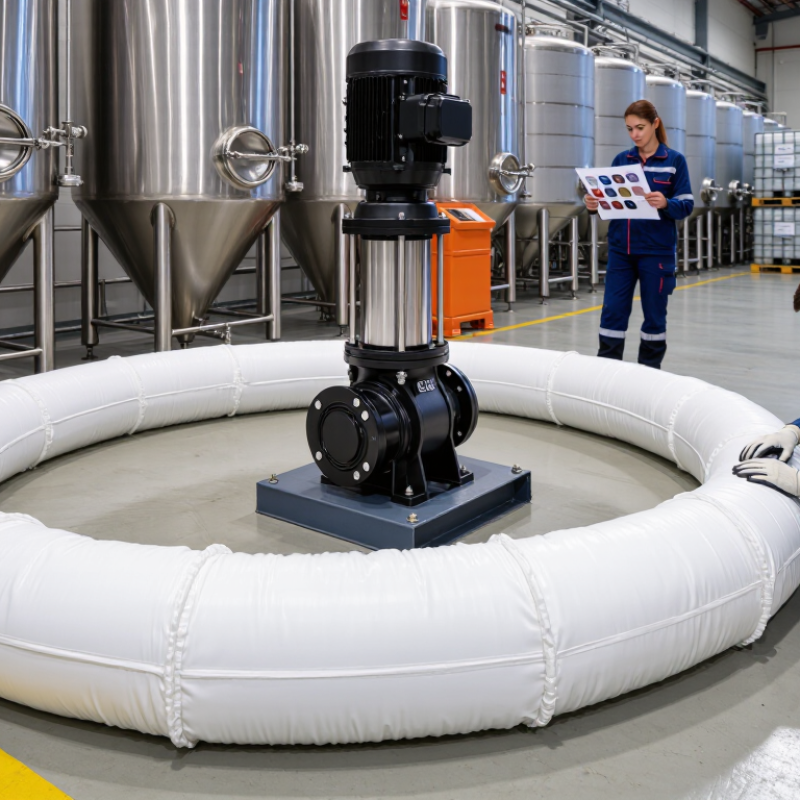
An absorbent sleeve is a flexible tube designed to capture leaks, drips, and small spills. It usually contains absorbent fibers inside a mesh or fabric cover. The outer layer allows liquid to enter while helping hold the material together. When liquid reaches the core, capillary action draws it through the fibers. The fluid then spreads across the sleeve instead of remaining in one wet spot.
The best sleeve depends on the liquid, leak location, and expected volume. Oil needs a different absorbent structure than water-based fluid. Check the product’s tested absorption capacity, recovery strength, lint level, and disposal guidance. A sleeve placed around a pipe should fit closely without restricting movement. Too much pressure can reduce contact with the leaking surface. Too little contact can leave a narrow path for fluid to escape.
In practical inspections, technicians should examine seams and end closures before use. A sleeve may look strong but fail after saturation or repeated handling. That detail is easy to overlook. For 2026 purchasing decisions, documented test methods matter more than attractive capacity numbers. Compare results under similar liquid types and temperatures. Reusable sleeves may reduce waste, but cleaning can be difficult and incomplete. This trade-off deserves a site-specific review. A small trial near the actual equipment often reveals fit problems that a catalog cannot show.

An absorbent sleeve is a tubular sorbent used to contain and collect spills around machinery, pipes, containers, and work areas. It works through capillary action: liquid travels through the porous material and is held within the sleeve's internal fiber structure.
The chart shows representative absorbency benchmarks for common sleeve constructions, expressed as grams of liquid absorbed per gram of dry sorbent. Polypropylene is typically preferred for oils and fuels, cellulose blends are suitable for many water-based spills, and mineral-filled materials generally provide lower capacity but may be useful where non-flammability and chemical resistance are priorities. Actual performance depends on liquid type, sleeve density, construction, and test conditions.
Reference basis: representative midpoint values from commonly reported sorbent-capacity ranges measured using ASTM F726-style testing. Values are comparative benchmarks, not a product specification.
Choosing an absorbent sleeve starts with understanding the spill, not the product label. Identify the liquid, expected volume, surface type, and likely flow direction. Water-based spills need different performance from oils, coolants, or mild chemicals. Check the safety data sheet before selecting materials. Compatibility matters.
Measure the risk area carefully. A sleeve should surround the spill without leaving gaps, yet remain flexible around equipment. Consider absorbency, length, diameter, tear resistance, and visibility. In practical assessments, teams often choose by capacity alone. That is a mistake. A highly absorbent sleeve may still fail if it shifts on a wet floor. I have seen small leaks spread beneath machinery because placement was delayed. Fast access matters.
Tips: Keep several sizes near known spill points. Test one sleeve on the actual surface before bulk purchasing. Check whether workers can deploy it while wearing required gloves. Review storage conditions, inspection dates, and disposal procedures regularly. Do not assume a sleeve protects against every chemical. Reassess after equipment changes, seasonal temperature shifts, or repeated near-misses. Some assumptions will be wrong. That is useful information.
Material choice should match the liquid, temperature, and working environment. Polypropylene sleeves usually resist water-based and oil-based liquids while staying lightweight. Cellulose blends can absorb quickly, but they may weaken after prolonged saturation. Recycled fibers offer a lower-impact option, yet their strength can vary between batches. Always check the technical data and test a small section before full deployment. Material performance is not identical in a catalog and beside a leaking pipe.
Design affects handling as much as absorbency. A tightly stitched sleeve can hold its shape around hoses, valves, and uneven fittings. A looser outer mesh may improve flexibility, but it can expose seams to abrasion. Compare the sleeve diameter with the equipment diameter, then allow room for movement. Fit matters. A sleeve that slides overnight cannot protect a busy work area. Some designs include clips, ties, or overlapping ends, which reduce gaps during installation. In my field checks, these simple details often saved more time than a higher absorption rating.
Look beyond the headline capacity. Ask how quickly the sleeve absorbs, how securely it retains liquid, and how easily workers can replace it without dripping. A heavy sleeve may hold more, but it can become awkward when saturated. That trade-off deserves attention. I have also found that bright outer colors improve inspection, although color alone proves nothing about performance. Compare independent test methods, storage instructions, seam quality, and disposal guidance. No material is perfect. The best choice depends on the leak pattern, access space, and the mistakes people may realistically make.
Choosing an absorbent sleeve starts with the spill you realistically expect, not the largest number on the package. Measure the liquid volume around a pipe, valve, or container, then add a practical safety margin. A sleeve that absorbs 1.5 liters may fail quickly beside a leaking drum. Check whether its capacity is measured under controlled conditions. Real workplace pressure, dust, and repeated contact can reduce performance. That detail is easy to overlook.
Tips: Test one sleeve before bulk purchasing. Place it around the intended surface for several hours. Check for sagging, leakage, fiber shedding, or difficult removal. Record the results with photographs and simple measurements. A small trial often reveals more than a sales description.
Durability depends on the outer fabric, stitching, filling, and exposure conditions. Look for resistance to tearing, compression, moisture, and regular handling. Outdoor use may require protection from sunlight and temperature changes. Compatibility matters just as much. Confirm the sleeve suits the liquid, surface material, diameter, and operating temperature. Some absorbents perform well with water but react poorly to oils or aggressive chemicals. Do not guess from appearance. Review technical data and request fluid-specific guidance when details are uncertain. I have seen otherwise suitable sleeves fail because the pipe coating was too smooth, or the fit was slightly loose. A perfect checklist cannot replace an honest site inspection.
Choosing the best absorbent sleeve in 2026 starts with the spill, not the product label. Identify the liquid, expected volume, temperature, and contact surface. A sleeve for light maintenance drips may fail during a sudden release. Check absorbency ratings, sleeve diameter, length, and material compatibility. Confirm that the sleeve fits tightly around the pipe, hose, or container. A loose fit can allow liquid to travel underneath. Read the technical data sheet carefully, especially when handling oils, solvents, or corrosive liquids. When uncertain, test a small section first.
Tips: Wear suitable protective equipment. Place sleeves before leaks spread. Avoid dragging them across rough floors. Press gently around bends and joints. Keep a replacement nearby.
During use, inspect the sleeve every few hours, or more often in warm conditions. Watch for swelling, tearing, discoloration, or liquid escaping at the edges. Replace it when saturated, damaged, or visibly unstable. Do not wait for a spill to reach the floor. Used sleeves should follow your site’s approved waste procedure. Store unused sleeves in a clean, dry cabinet, away from sunlight, heat, moisture, and sharp tools. Keep packaging closed and rotate older stock forward. I have seen perfectly good sleeves become dusty and brittle after careless storage. That mistake is easy to prevent, but often overlooked. Record the installation date, location, and replacement reason. These notes reveal whether the selected sleeve is truly suitable or only convenient.
| Sleeve Type | Best For | Typical Liquids | Absorption Capacity* | Construction | Recommended Use | Replacement Trigger |
|---|---|---|---|---|---|---|
| Universal Absorbent Sleeve | General maintenance and routine leak control | Water-based fluids, oils, coolants, and mild solvents | Approximately 1–4 L per sleeve, depending on length and fill material | Polypropylene outer sleeve with absorbent filling | Place around the source of a small leak or beneath a slow drip | When saturated, damaged, compressed, or unable to contain the leak |
| Oil-Only Absorbent Sleeve | Outdoor areas, workshops, and oil-contaminated water | Petroleum oils, diesel, hydraulic oil, lubricants, and fuel | Approximately 1–4 L per sleeve, subject to product size | Hydrophobic polypropylene that repels water | Use around machinery, tanks, drains, or floating oil contamination | When oil-loaded, torn, displaced, or no longer maintains a containment barrier |
| Chemical Absorbent Sleeve | Laboratories, chemical handling, and hazardous-material areas | A wide range of acids, bases, and aggressive liquid chemicals | Approximately 1–3 L per sleeve; verify compatibility before use | Chemically resistant outer material and compatible absorbent core | Use only after checking the safety data sheet and compatibility guidance | Immediately after saturation, chemical exposure, degradation, or visible damage |
| High-Visibility Absorbent Sleeve | Walkways, loading bays, and areas with vehicle traffic | Common workplace oils, water, coolants, and non-aggressive liquids | Approximately 1–4 L per sleeve | Absorbent sleeve with a contrasting or high-visibility outer cover | Mark the hazard area and reduce trip or vehicle-contact risks | When saturated, obscured by dirt, flattened, or no longer clearly visible |
| Heavy-Duty Absorbent Sleeve | Large equipment, rough floors, and repeated-use maintenance zones | Oil, coolant, water, and other non-aggressive industrial fluids | Approximately 3–8 L per sleeve, depending on diameter and length | Reinforced outer cover with a dense absorbent core | Use where abrasion resistance and higher liquid retention are required | When the cover is punctured, the core is saturated, or leakage bypasses the sleeve |
*Absorption capacity is a general planning range. Actual performance varies with sleeve length, diameter, absorbent material, liquid viscosity, temperature, and test method. Always confirm the technical data sheet before selecting a sleeve for hazardous chemicals or large spills.