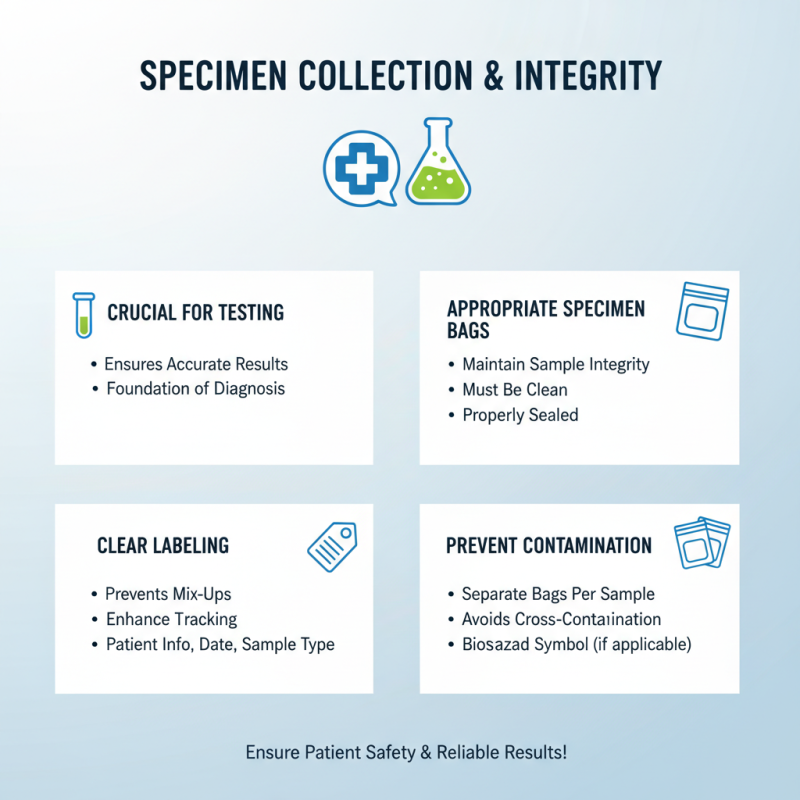
Why Are Specimen Bags Essential for Medical Testing?
In the world of medical testing, the importance of a specimen bag cannot be understated. These bags serve as critical tools for transporting samples securely and efficiently. A specimen bag ensures that specimens remain uncontaminated during transit. This is vital for accurate test results, which can significantly influence patient care decisions.
Each specimen bag is designed to meet specific safety and quality standards. They come in various sizes and materials, tailored for different types of specimens, such as blood, urine, or tissue samples. However, there are instances where proper use may be overlooked, leading to issues in sample integrity. An improper sealing method can compromise a specimen, resulting in the need for retesting.
Ultimately, while specimen bags are essential, their effectiveness relies heavily on proper handling practices. It's easy to underestimate their role in the testing process. However, each step, from collection to delivery, plays a crucial part in ensuring patient safety and care quality.

Importance of Specimen Bags in Medical Testing
In medical testing, specimen bags play a crucial role. These bags ensure samples remain secure during transport. Their primary function is to prevent contamination. Contaminated samples can lead to incorrect test results. This can severely affect patient diagnosis and treatment.
Specimen bags come in various sizes and materials. Some are designed to be tamper-evident, which adds an extra layer of security. This feature is essential, especially in forensic cases. Proper labeling is also vital. A bag without clear labels can create confusion or even mix-ups. Samples that are mishandled or misidentified can waste resources.
However, not all specimen bags are created equal. Transparency and durability vary. Some bags may tear easily, compromising the sample inside. Healthcare staff should regularly evaluate the quality of these bags. Inconsistent practices can lead to significant challenges. Addressing these issues is important for improving testing accuracy. Ultimately, the effectiveness of medical testing hinges on reliable specimen collection and storage.
Importance of Specimen Bags in Medical Testing
Specimen bags are pivotal in medical testing for several reasons. They help in preventing contamination, preserving sample integrity, facilitating handling, ensuring identification, and improving storage conditions, as illustrated in the chart above.
Types of Specimen Bags Used in Healthcare
In healthcare, specimen bags are crucial for medical testing. They ensure the safe transport and collection of various samples. Types of specimen bags vary based on their purpose and the materials used. Generally, two main types are widely used: single-use bags and multi-use bags.
Single-use bags are often made of plastic. They are designed for one-time use to prevent contamination. A recent report highlighted that single-use bags reduce cross-contamination risk by over 70%. Their convenience makes them popular in hospitals and clinics. These bags often feature labels for easy identification of samples, promoting organization in laboratories.
Multi-use bags cater to different testing needs. For example, some are designed for biobanking, while others are used in surgical procedures. Despite their versatility, misuse can lead to mistakes. Inappropriate labeling or damage to the bag may compromise specimen integrity. Research indicates that poor communication in sample handling can lead to misdiagnoses in up to 15% of cases. Addressing these issues is crucial for improving healthcare outcomes.
Key Features of Effective Specimen Bags
Specimen bags play a crucial role in medical testing. They ensure safe transport and handling of samples. Effective specimen bags must meet key features. These features enhance reliability and prevent contamination.
One critical aspect is material durability. According to industry reports, bags made of polyethylene exhibit optimal strength. This strength helps avoid leaks and breakage during transit. Additionally, specimen bags must be airtight. Research shows that airtight seals minimize the risk of exposure to environmental contaminants. A common challenge arises when bags are not correctly sealed. This can lead to compromised samples.
Another essential feature is clear labeling. Proper labels help in identifying samples quickly. Clarity aids technicians in preventing mix-ups. Utilizing color-coded labels can streamline the sorting process. Unfortunately, some facilities still overlook this point, causing delays in testing. These small oversights can significantly affect the overall efficiency of medical testing.
Why Are Specimen Bags Essential for Medical Testing? - Key Features of Effective Specimen Bags
| Feature |
Description |
Importance |
| Material Quality |
Made from durable, leak-proof materials |
Prevents contamination and preserves specimen integrity |
| Labeling Area |
Designated space for clear labeling of specimens |
Ensures accurate identification and tracking |
| Closure Type |
Secure closure mechanisms (zipper, adhesive) |
Prevents spillage and contamination during transport |
| Size Variety |
Available in multiple sizes to accommodate different specimens |
Provides flexibility for various medical tests |
| Tamper-Evident Features |
Designs that indicate if the bag has been opened |
Enhances security and reliability of the specimen's chain of custody |
| Compatibility with Testing Methods |
Works well with various laboratory testing processes |
Supports accurate and efficient laboratory analysis |
Impact of Specimen Bags on Test Accuracy and Reliability
Specimen bags play a vital role in medical testing. They protect samples from contamination. This protection is essential for accurate results. According to a report from the American Clinical Laboratory Association, incorrect sample handling leads to a high rate of diagnostic errors. In fact, nearly 13% of lab tests yield unreliable results due to poor sample integrity.
The quality of specimen bags directly influences test accuracy. Contamination is a leading cause of false positives and negatives. A study highlighted that using proper bags can reduce contamination rates by over 30%. It is alarming how many specimens are compromised. Healthcare professionals need to prioritize safe storage and transport methods.
Proper labeling is equally crucial. Confusion can arise if specimens are mislabeled. A recent survey found that 10% of specimens arrived at labs with incomplete information. This can delay diagnoses. It also raises questions about the reliability of the tests. The potential for human error adds to the complexity. Each step in the process warrants careful attention. Failure to address these issues can impact patient outcomes significantly.

 +86 178 5514 5298
 CONTACT NUMBER
 CONTACT NUMBER