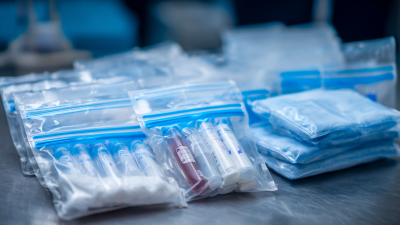
+86 178 5514 5298


Choosing reliable UN 3373 bag suppliers requires more than comparing prices, colors, and delivery promises. Global buyers need packaging that performs under pressure, during long routes, and inside busy laboratory workflows. A sample may leave a clinic in a warm country, pass through several airports, and arrive after a delayed connection. The bag must still remain secure.
Dr. Raina MacIntyre, a global biosecurity expert, has stated, “Preparedness is not a one-off event; it is a continuous process.” This principle fits specimen packaging closely. Supplier evaluation should include material strength, leak resistance, closure quality, absorbent capacity, and compatibility with applicable transport instructions. Buyers should also examine manufacturing consistency, batch traceability, testing records, and export documentation.
Small details matter.
A strong UN 3373 bag should support the complete packaging system, rather than act as a decorative outer layer. Clear markings, practical dimensions, reliable seals, and readable instructions can reduce handling mistakes. Supplier communication matters too. Can the manufacturer explain its quality controls? Can it provide samples before a large order? Does it respond clearly when specifications change?
These questions separate established producers from attractive but uncertain listings. Still, no supplier is perfect. Even experienced buyers can overlook transit temperature, warehouse conditions, or regional documentation needs. That deserves reflection.
This guide examines leading China UN 3373 bag suppliers for global buyers. It considers product quality, customization, certifications, production capacity, communication, and international support. The aim is not to promote the cheapest option. It is to help purchasers make a careful, evidence-based decision for safer and more dependable specimen transport.
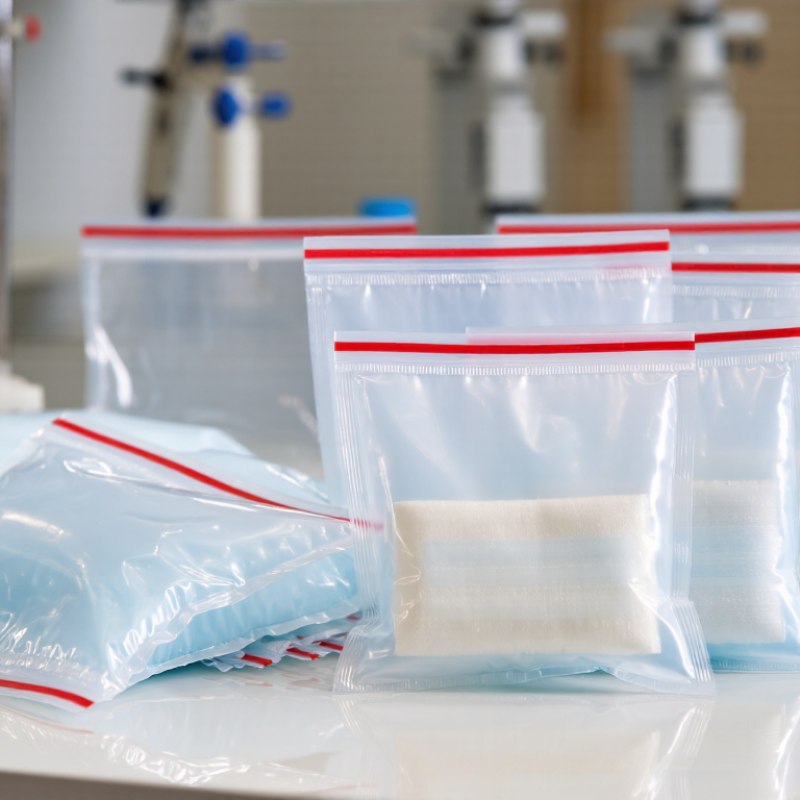
A UN 3373 bag supports the safe transport of Category B biological substances. It is not simply a plastic pouch. The complete package normally includes a leakproof primary receptacle, absorbent material, a leakproof secondary package, and a strong outer package.
The details matter. Under Packing Instruction P650 in the UN Model Regulations, liquid samples need enough absorbent material to contain the full volume. IATA Dangerous Goods Regulations also require packaging tested to withstand internal pressure of at least 95 kPa. That protects workers when aircraft cargo holds experience pressure changes. A clear UN 3373 mark helps handlers identify the package quickly.
The bag itself does not create compliance. This is often misunderstood. A supplier should provide material specifications, closure testing, dimensional data, and traceable quality records. WHO’s Laboratory Biosafety Manual, 4th edition, supports a risk-based approach rather than relying on labels alone. In practice, a small tear, weak seal, or missing absorbent pad can undermine an otherwise correct shipment. Packaging reviews sometimes reveal these simple failures. We should admit that supplier brochures rarely show the whole risk picture. Reliable buyers should check samples, sealing performance, and documentation before placing large orders.

Top China UN 3373 Bag Suppliers for Global Buyers?
Key Standards for UN 3373 Packaging Compliance
Reliable UN 3373 packaging begins with compliance, not appearance. The UN Model Regulations, 23rd revised edition, identify UN3373 shipments as Category B substances. Packaging must follow Packing Instruction P650. This requires three protective layers: a leakproof primary receptacle, a leakproof secondary package, and a strong outer package.
The numbers matter. P650 requires packaging to withstand a 1.2-meter drop test. Liquid packages must resist an internal pressure difference of 95 kPa. Each primary receptacle should hold no more than one liter, while the complete package should not exceed four liters. For solids, the total limit is four kilograms. Absorbent material must handle the full liquid volume. Small details prevent large failures.
WHO’s Laboratory Biosafety Manual, fourth edition, also emphasizes secure containment and clear identification during specimen transport. Buyers should request test reports, closure instructions, material specifications, and production traceability from Chinese suppliers. Inspect the seal yourself. A thick bag alone proves little. Some supplier documents may look complete but lack test conditions or batch references. That is where careful review matters. Compliance can still be misunderstood, especially when local transport rules add requirements beyond P650.
| Compliance Dimension | Applicable Requirement | Minimum Standard or Specification | Supplier Documentation to Request | Buyer Verification Point |
|---|---|---|---|---|
| Packaging instruction | UN 3373 Biological Substance, Category B | Packaging must meet IATA Packing Instruction 650 for air transport; equivalent road or postal rules may also apply depending on the route. | Product specification, packaging configuration drawing, and applicable regulatory statement | Confirm that the complete packaging system, not only the outer bag, is designed for PI 650 use. |
| Three-part packaging system | Primary receptacle, secondary packaging, and rigid outer packaging | All three components are required. The bag is normally used as secondary containment or as an accessory within a compliant system. | Layered packaging diagram and bill of materials | Check that the supplied bag is not represented as a complete UN 3373 package by itself. |
| Leakproof primary receptacle | Liquid or solid specimen containment | Primary receptacles must be leakproof for liquids or siftproof for solids and must be securely closed. | Closure design, sealing method, and leak-test information | Verify compatibility between the specimen container and the secondary bag or pouch. |
| Absorbent material | Liquid biological substances | Absorbent material must be placed between the primary receptacle and secondary packaging and must absorb the entire liquid contents of all primary receptacles. | Absorbency capacity per sheet or kit and material specification | Calculate required capacity using the maximum liquid volume, not the average fill volume. |
| Secondary packaging | Protection against leakage and specimen movement | The secondary packaging must be leakproof for liquids or siftproof for solids and must prevent movement between receptacles. | Seal type, material thickness, dimensional tolerance, and closure instructions | Inspect zipper, heat seal, adhesive seal, or tamper-evident closure for consistent performance. |
| Pressure resistance | Air transport pressure conditions | For air transport, liquid primary receptacles must withstand an internal pressure differential of at least 95 kPa without leakage. | Pressure-test method, test report, and tested component identification | Confirm that the test applies to the actual receptacle and closure combination being supplied. |
| Rigid outer packaging | Protection during handling and transport | The outer packaging must be rigid, strong, and suitably sized; one external dimension must be at least 100 mm. | Outer box material, dimensions, closure method, and configuration specification | Ensure the bag is used inside an appropriate rigid outer package rather than shipped as the outer package. |
| Temperature control | Ambient, refrigerated, or frozen specimens | The packaging should remain functional across the intended temperature range, including exposure to cold packs, dry ice, or frozen products where applicable. | Temperature-range declaration, material compatibility data, and cold-condition test results | Check seal flexibility, film brittleness, and label adhesion after conditioning at the planned temperature. |
| UN 3373 marking | Identification of the shipment | The diamond-shaped UN 3373 mark must be displayed on the outer package when required by the transport regulation. | Artwork proof, mark dimensions, and printing or label durability specification | Verify contrast, legibility, correct UN number, and resistance to handling and moisture. |
| Shipper and consignee information | Traceability during transport | The name and address of a responsible person or organization should be shown on the outer package in accordance with the applicable transport rules. | Label template and variable-data printing capability | Confirm sufficient writable or printable space without covering mandatory marks. |
| Dry ice compatibility | Shipments packed with carbon dioxide, solid | Dry ice requires additional packaging, ventilation, labeling, and documentation controls; airtight packaging must not trap gas. | Material compatibility statement and separate dry-ice packing instructions | Do not treat ordinary UN 3373 bag specifications as sufficient for dry-ice shipments. |
| Quality control | Consistent production performance | Critical characteristics include film thickness, seal strength, closure function, dimensions, printing accuracy, and cleanliness. | Inspection plan, batch records, certificate of conformity, and sample retention procedure | Use pre-shipment inspection and batch traceability for recurring orders. |
| Regulatory route review | International and domestic transport | Air, road, postal, and destination-country rules can differ. Common references include IATA PI 650, ADR P650, and applicable national regulations. | Route-specific compliance checklist and current revision references | Review the final route, carrier requirements, specimen classification, and any local restrictions before purchase. |
Note: UN 3373 compliance applies to the complete packaging system and transport route. A specimen bag alone is not a complete UN 3373 package.
Evaluating China-based UN 3373 bag suppliers requires evidence, not attractive photographs. The WHO Guidance on Regulations for the Transport of Infectious Substances 2023–2024 specifies triple packaging for Category B specimens. A supplier should explain how its bag supports the primary receptacle, secondary containment, and rigid outer packaging.
Check test records carefully. Under IATA Packing Instruction 650, the completed package must withstand a 95 kPa pressure differential without leakage. Ask for dated laboratory reports, material specifications, seal-strength results, and production-batch traceability. The bag should also provide visible space for required markings and handling information. A sample may look excellent. It can still fail during freezing, stacking, or rough transfers.
Practical audits should include factory process controls, incoming-material checks, and pre-shipment inspection. WHO emphasizes training and documented procedures, so request operator training records and corrective-action examples. Compare at least three production samples from different lots. Differences in zipper force, weld width, or absorbent placement deserve questions. Not every report proves current consistency. That is an uncomfortable limitation. Check whether the testing laboratory is competent, whether the report matches the supplied material, and whether retesting occurs after design changes. Delivery capacity matters too: review monthly output, inspection plans, complaint response time, and replacement terms before approving a long-term supplier.
Sources: WHO Guidance 2023–2024; IATA Dangerous Goods Regulations, Packing Instruction 650; UN Model Regulations, 23rd revised edition.
China UN 3373 bag suppliers serve laboratories, clinics, and logistics companies worldwide. The better suppliers understand that a compliant bag is more than a plastic pouch. It must support safe handling under Packing Instruction P650 and match the buyer’s packaging system.
During supplier evaluations, I look for clear material specifications, reliable sealing, and traceable production records. A strong supplier can explain film thickness, closure strength, absorbent capacity, and label adhesion without vague promises. Sample bags should withstand shaking, compression, and temperature changes. Small details matter, such as a readable biohazard marking and enough space for required documentation.
Ask suppliers for batch records, inspection reports, and packaging test evidence. Confirm whether the bag is designed for primary or secondary containment. This distinction is often overlooked. Some factories offer attractive prices but provide weak documentation or inconsistent dimensions. That creates avoidable problems during international transport.
Communication quality also reveals manufacturing discipline. Suppliers should answer technical questions directly and identify limitations honestly. I have found that rushed samples can hide sealing defects. A second inspection is worthwhile. Buyers should also verify current destination-country requirements with qualified compliance professionals, because transport rules and carrier procedures may differ. Reliability is built through evidence, not confident language.
Key measurable UN 3373 / IATA PI 650 reference points for comparing supplier specifications. The figures represent packaging requirements, not company or brand performance.
A compliant UN 3373 shipping system uses three packaging layers. For liquid shipments, the primary receptacle is limited to 1 L and the complete package to 4 L. The packaging system must withstand an internal pressure differential of 95 kPa, and the outer package must have at least one surface measuring 100 mm × 100 mm.
Ordering from a Chinese UN 3373 bag supplier requires more than comparing unit prices. Ask for material specifications, production capacity, and recent test records. A reliable supplier should explain how the bag supports compliant triple packaging. Request samples before placing a large order. Check zipper strength, weld seams, absorbent capacity, and label adhesion by hand.
Quality control should be documented at every production stage. Inspect incoming film, verify dimensions, and record sealing temperatures. The finished bag should fit the intended secondary receptacle without excessive movement. Ask for lot numbers and inspection reports. Independent testing can confirm pressure resistance, leak performance, and package integrity. Do not accept vague claims. A low price may hide thin film or inconsistent seals.
International shipping needs careful coordination. Confirm whether the final package follows current carrier and destination requirements for Biological Substance, Category B shipments. Check the required marks, documents, outer carton limits, and customs descriptions before dispatch. Keep shipment records, invoices, and test documents together. Moisture protection matters during sea freight. Temperature-sensitive contents need separate packaging decisions. A pilot shipment is sensible, but not foolproof. Delays may still occur because of customs reviews or carrier acceptance. Buyers should also review requirements with a qualified dangerous-goods professional, since local rules and transport procedures can change.