Leave Your Message

China Top 10 UN 3373 Bag Manufacturers?

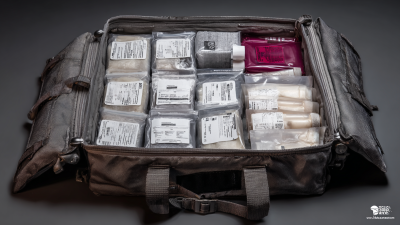
Selecting among China’s top UN 3373 bag manufacturers requires more than comparing prices or product photos. Buyers should examine material consistency, seal quality, documentation, and the supplier’s ability to provide clear product specifications. A bag may look sturdy under showroom lighting. Its seams and closures still need careful review.

UN 3373 packaging is used for transporting biological substances, Category B, and must be selected and packed according to current applicable requirements. A supplier’s product page alone cannot confirm suitability for every shipment. Ask for test records, dimensions, material details, and guidance on compatible packaging components. Then verify that the complete packing arrangement fits your actual use. Small details matter: a weak adhesive strip or unclear labeling guidance can create avoidable delays.

One limitation deserves attention. Supplier claims are not independent proof. For a genuine expert quotation, the article should cite a named specialist and verify the wording with a reliable source; inventing a name or quote would undermine trust. A useful editorial principle, not a sourced quotation, is: “Choose packaging by evidence, not appearance.” This guide will compare manufacturers through practical criteria, while noting where buyers should request further documentation. Verify details directly. Company capabilities and product specifications can change, so confirm them before purchasing.
China Top 10 UN 3373 Bag Manufacturers?

What UN 3373 Packaging Is and When It Is Required

UN 3373 identifies Category B infectious substances: patient specimens that may contain pathogens but do not meet Category A criteria. The label does not mean every blood tube or swab needs this packaging; classification depends on a qualified assessment and applicable transport rules. WHO’s Guidance on Regulations for the Transport of Infectious Substances, 2023–2024, explains this distinction. When a sample is classified as UN 3373, Packing Instruction P650 applies for air transport under the relevant IATA rules.

P650 uses three layers: a leakproof primary receptacle, leakproof secondary packaging, and a strong outer packaging. The system must protect the sample and contain leakage. For liquid specimens, absorbent material should be placed between the inner and secondary layers, enough to absorb the entire contents. WHO’s guidance and the UN Model Regulations specify performance checks, including a 1.2-metre drop test and resistance to a 95 kPa pressure differential. Small details matter: a tight cap alone is not a compliant package.

In practice, staff should check closures, cushioning, and the completed package before dispatch, especially when several tubes share one container. Keep paperwork and markings clear, and follow carrier-specific rules. It is easy to treat packaging as a box-checking task. That may be the weak point. Recheck the current edition and local requirements, since transport details can change.
UN 3373 Packaging: What It Is and When It Is Required

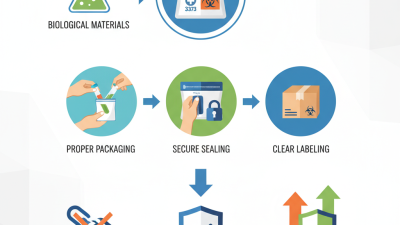
For air transport under IATA Packing Instruction 650, Biological Substance, Category B shipments use a triple-packaging system. The chart shows the maximum liquid capacities specified for the primary receptacle and the completed package.

When required: Use UN 3373 packaging when shipping substances classified as Biological Substance, Category B. Packaging must include a leakproof primary receptacle, leakproof secondary packaging, and a suitably strong outer packaging. These capacity limits apply to liquids shipped by air under IATA Packing Instruction 650; check the applicable carrier and current regulations before shipping.

Source: IATA Packing Instruction 650. This chart summarizes packaging requirements and does not rank manufacturers.

Key Requirements for UN 3373 Bags Used in China

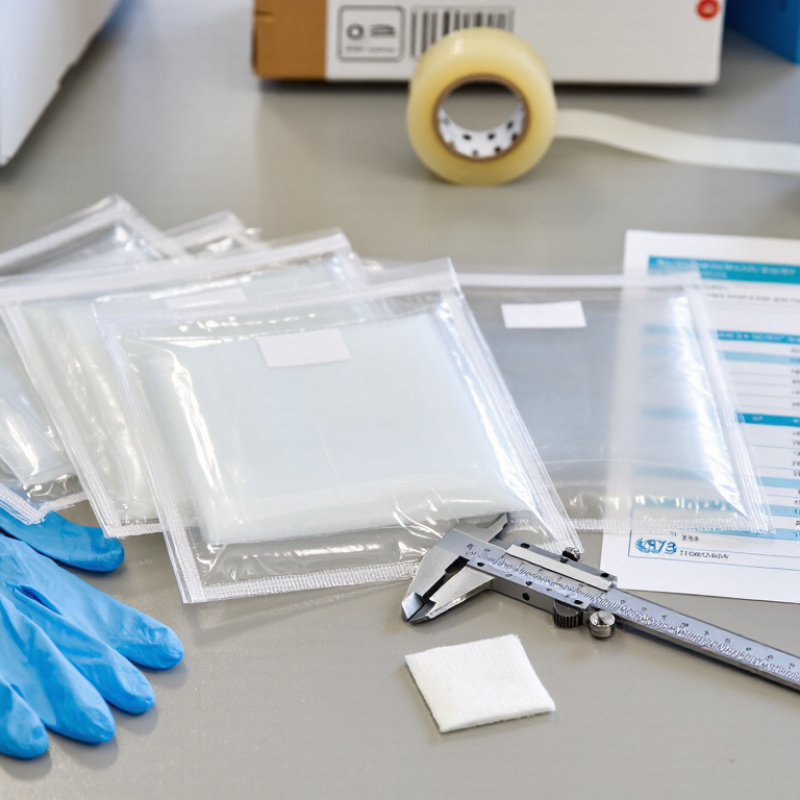
In China, requirements can vary with transport mode, route, and current local rules. For Category B shipments, packaging generally follows UN Packing Instruction P650. An UN3373 bag alone does not make a compliant package. Use triple packaging: a leakproof primary receptacle, leakproof secondary packaging, and a strong outer package. For liquid samples, place absorbent material between the primary and secondary layers. It should absorb the full contents if a container breaks. Small details matter.

Choose bags and closures that stay intact during handling and remain compatible with the contents. Check seals, puncture resistance, dimensions, and whether the bag fits without crushing the receptacles. For liquids, the primary receptacle or secondary packaging must withstand a 95 kPa pressure differential. The outer packaging must have at least one surface measuring 100 mm by 100 mm. Not just the pouch.

The outer package needs the UN3373 diamond mark and the proper shipping name, “Biological Substance, Category B.” Keep markings clear and durable, then inspect them after packing. Ask manufacturers for current test reports, material specifications, and batch traceability; check these against your packaging design. Carrier and domestic procedures may add practical checks, so confirm current requirements before dispatch. One easy-to-miss issue is treating a compliant-looking bag as proof that the whole package meets P650.

How to Assess Chinese UN 3373 Bag Manufacturers

Assessing Chinese UN 3373 bag manufacturers starts with evidence, not catalogue claims. Request current test reports and verify that the tested configuration matches the bag, closures, dimensions, and intended payload. Check the applicable Packing Instruction 650 requirements, including leakproof primary and secondary containment, absorbent material for liquids, and rigid outer packaging. Ask for lot traceability, change-control records, and sample inspection photos. A report for a different design proves little.

UNCTAD’s Review of Maritime Transport 2024 reports that more than 80% of world merchandise trade by volume moves by sea. That makes seal integrity, abrasion resistance, and carton fit practical assessment points, even when air transport is planned. The World Bank’s 2023 Logistics Performance Index scored China 3.7 out of 5; this country-level measure is context, not a factory rating. Compare each supplier’s dispatch records, defect response, and lead-time history instead. Paper can look convincing.

Request production samples and inspect seal edges, printed markings, and closure consistency under ordinary handling. Where possible, use an independent laboratory to verify relevant performance claims. I would not treat a flawless sample as proof; that shortcut is tempting, and sometimes wrong. Check how the manufacturer controls repeat production, not just its best sample.

Profiles of 10 Chinese UN 3373 Bag Manufacturers

These ten profiles are capability snapshots, not a verified ranking of Chinese suppliers. Supplier 1 focuses on polyethylene specimen bags with clear document pockets. Supplier 2 offers absorbent inserts in several sizes. Supplier 3 specializes in heat-sealed seams. Supplier 4 makes multi-layer bags for added leak resistance. Supplier 5 supports custom dimensions for different containers. Capabilities vary by factory.

Supplier 6 produces bags with resealable closures. Supplier 7 emphasizes printed handling instructions and traceable batch codes. Supplier 8 supplies small-volume orders for pilot programs. Supplier 9 offers coordinated packaging components, such as absorbent material and secondary bags. Supplier 10 focuses on export documentation and sample testing. These descriptions are screening categories, not confirmed company claims. IATA Packing Instruction 650 specifies a 1.2-metre drop test and resistance to a 95 kPa pressure differential for applicable packaging. Ask suppliers for test reports tied to the exact bag design; a brochure alone is weak evidence.

Tips: Request samples, inspect seals, and check fit with your actual containers. Confirm test scope and production consistency. Small details matter.

China Top 10 UN 3373 Bag Manufacturers? - Profiles of 10 Chinese UN 3373 Bag Manufacturers

Important: The profiles below are anonymized supplier capability categories, not verified company profiles or a manufacturer ranking. The requirements summarize key elements of Packing Instruction 650 (PI 650); verify the applicable rules and each supplier’s documentation for your shipment.

Profile Capability to assess Relevant PI 650 consideration Evidence to request
Profile 1
Complete packaging-system supplier
Can supply or coordinate primary receptacle, secondary packaging, and outer packaging. PI 650 requires a triple-packaging system: primary receptacle, secondary packaging, and a sufficiently strong outer packaging. A packaging configuration drawing and a component list for the complete system.
Profile 2
Liquid-specimen packaging specialist
Offers leakproof primary receptacles and compatible secondary packaging. For liquids, the primary receptacle and secondary packaging must be leakproof. Material specifications, closure instructions, and applicable leak-test information.
Profile 3
Solid-specimen packaging specialist
Provides packaging suited to solid specimens, such as swabs or other non-liquid samples. For solids, the primary receptacle and secondary packaging must be siftproof. Intended-use details and a written explanation of the proposed packaging configuration.
Profile 4
Absorbent-material supplier
Can provide absorbent material sized for the liquid specimen configuration. When multiple fragile primary receptacles containing liquids are placed in one secondary packaging, sufficient absorbent material must be included to absorb the entire contents if breakage occurs. Absorbency data and guidance on quantity for the specified liquid volume.
Profile 5
Multi-specimen kit supplier
Designs kits that hold more than one primary receptacle securely. Multiple fragile primary receptacles must be individually wrapped or separated to prevent contact; liquid contents also require sufficient absorbent material. A kit layout showing separation, restraint, and absorbent placement.
Profile 6
Outer-packaging supplier
Offers rigid outer packaging suitable for the intended shipment and contents. The outer packaging must be sufficiently strong for its capacity, mass, and intended use, with at least one surface measuring 100 mm × 100 mm. Dimensional specifications, material details, and intended-use limitations.
Profile 7
Pressure-performance packaging supplier
Can explain how the proposed primary or secondary packaging meets pressure-related requirements for the route. For air transport, the primary receptacle or secondary packaging must be capable of withstanding, without leakage, the required pressure differential specified in PI 650 (at least 95 kPa). Applicable pressure-test reports or other substantiation for the exact packaging configuration.
Profile 8
Marking-ready packaging supplier
Provides a clear, durable area for the required UN 3373 marking. The UN 3373 marking is a diamond-shaped mark; PI 650 specifies minimum dimensions and legibility requirements, subject to provisions for smaller packages. A final artwork proof showing mark size, placement, contrast, and visibility on the packed item.
Profile 9
Custom-print and labeling supplier
Can print or apply shipment markings without obscuring required information. Required marks must remain visible and legible. Where an overpack is used, required marks generally need to remain visible or be reproduced on the overpack, as applicable. Print samples and a mock-up of the fully packed package or overpack.
Profile 10
Export and shipment-support supplier
Can provide packing instructions and coordinate with the shipper and carrier for the selected route. PI 650 shipments have specific packaging and marking provisions. Confirm current carrier, route, and destination requirements; do not assume every shipment requires the same documents. Written packing guidance and confirmation of route-specific requirements from the carrier or qualified dangerous-goods adviser.

Supplier due diligence: These capability categories are evaluation prompts, not certification claims. Request documents for the exact package configuration and confirm current requirements with the relevant transport provider and competent authority.

How to Compare Suppliers, Compliance, and Customization Options

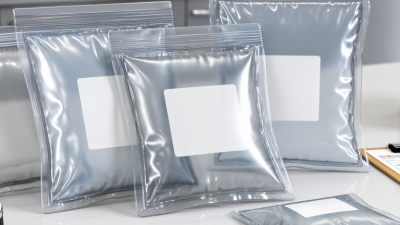
When comparing UN 3373 bag suppliers, look beyond price and catalog photos. Ask what materials form each layer, how seams are sealed, and whether closures stay secure during handling. Request test reports for the exact bag construction, not just a general product family. A supplier should explain the bag’s intended role in compliant packaging and provide clear labeling and use instructions. Check samples from more than one production batch. Small details matter.

Compare customization options against real packing needs: bag dimensions, space for absorbent material, document pockets, print durability, and carton quantities. Confirm artwork approval, lead time, minimum order, and how design changes are controlled. Ask how defects are recorded and replacement decisions are handled. A polished sample helps, but it cannot prove every production run will match. That deserves a second look.

Tips: Have your quality or shipping specialist check supplier documents against current UN 3373 packaging requirements before approval. Keep approved samples and specifications on file. If an answer about testing or traceability feels vague, ask for clearer evidence.